This year, the Lithuanian Audiosensory Library (LAB) is celebrating its 60th anniversary. Over the course of six decades, the library’s name, users’ needs, and book formats have changed—from Braille and the first audiobooks to e-books, the virtual library, and mobile apps. However, one thing has remained unchanged: the commitment to ensuring that as many people as possible can read and experience literature in other ways.
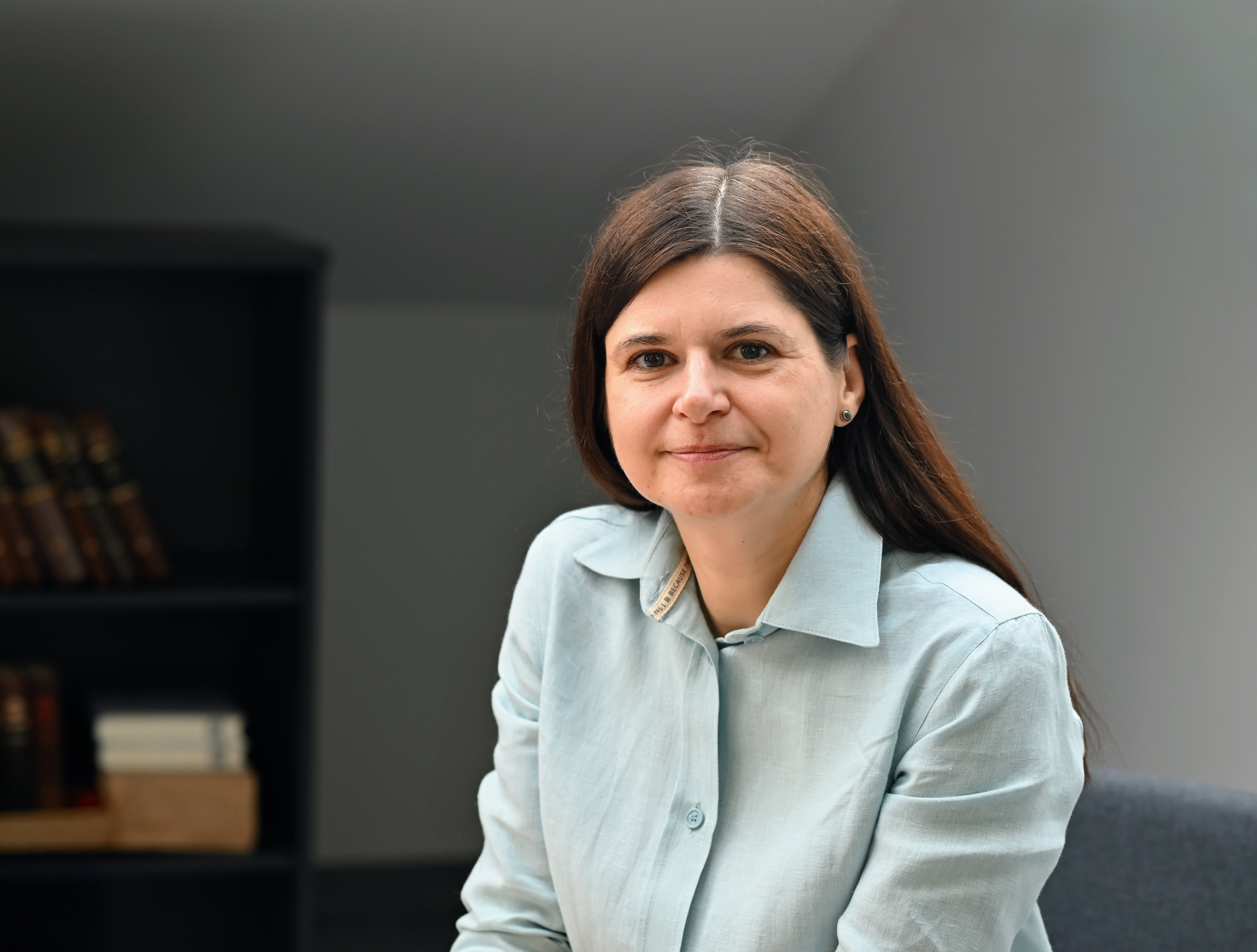
“These decades are, above all, a story about the people who created, nurtured, and sacredly believed in the mission of a library open to everyone. At the same time, it is the story of our nation’s maturation, bearing witness to a consistent effort to make culture accessible to everyone, creating a society in which we all have equal opportunities to learn and grow. Today is not only a celebration for all of us, but also a responsibility-based commitment to continually seek the best solutions for openness and accessibility,” says LAB Director Inga Davidonienė, inviting everyone to celebrate the library’s birthday together on September 3.
From small libraries to a network connecting all of Lithuania
Although the history of LAB dates back to 1966, its origins are linked to the Kaunas Institute for the Blind, founded in 1927, and the first books in Braille. After World War II, a network of libraries for the blind began to take shape in Lithuania: libraries were established in Vilnius, Kaunas, Panevėžys, Šiauliai, and Klaipėda, attached to work centers for the blind.
On February 1, 1966, these libraries were merged: the Central Library of the Lithuanian Society of the Blind (LAD) began operating in the country’s five largest cities and in Švėkšna. This date is considered the official beginning of the current Lithuanian Audiosensory Library. In 1992, the state—specifically, the Ministry of Culture and Education of the Republic of Lithuania—took over the management of this library network, and in 1995, the Lithuanian Library Act designated the Lithuanian Library for the Blind (LAB) as a library of national importance.
The transition from separate community libraries to a unified system was a significant step. Even today, the library network and its expansion remain a strength of LAB: in addition to the central branch in Vilnius and five regional branches in Lithuania’s major cities and in Ukmergė, publications reach readers through approximately 350 service points in various locations across Lithuania, including the country’s public libraries.
Over the past 60 years, the LAB’s mission has also changed. Previously, the library’s activities were focused solely on the blind and visually impaired, but today its services are intended for all people who are unable to read standard printed text. Whether due to dyslexia or developmental disabilities, the library’s mission is to ensure that everyone can read.
A Special Focus on Sound
Although the library began with a single dot—the first books in Braille were transcribed by hand, dot by dot—the history of LAB is inextricably linked to sound. It was sound—or, more precisely, audio readings—that for a long time was one of the most important, and often the only, ways to access literature.
That is why special attention is being paid to sound in the planning of the library’s anniversary celebration program. Two different projects are being created to mark the anniversary: audio stories and a sound wall. Both tell the story of the library through sound, but each in its own way: the audio stories invite visitors to get to know the people who create audiobooks more closely, while the sound wall allows visitors to hear the voices and literature that have accompanied the library’s history over six decades.
Readers rarely get the chance to see what goes on in recording studios. But according to Monika Baranauskaitė, a LAB announcer and the writer of these audio stories, life there is absolutely bustling.
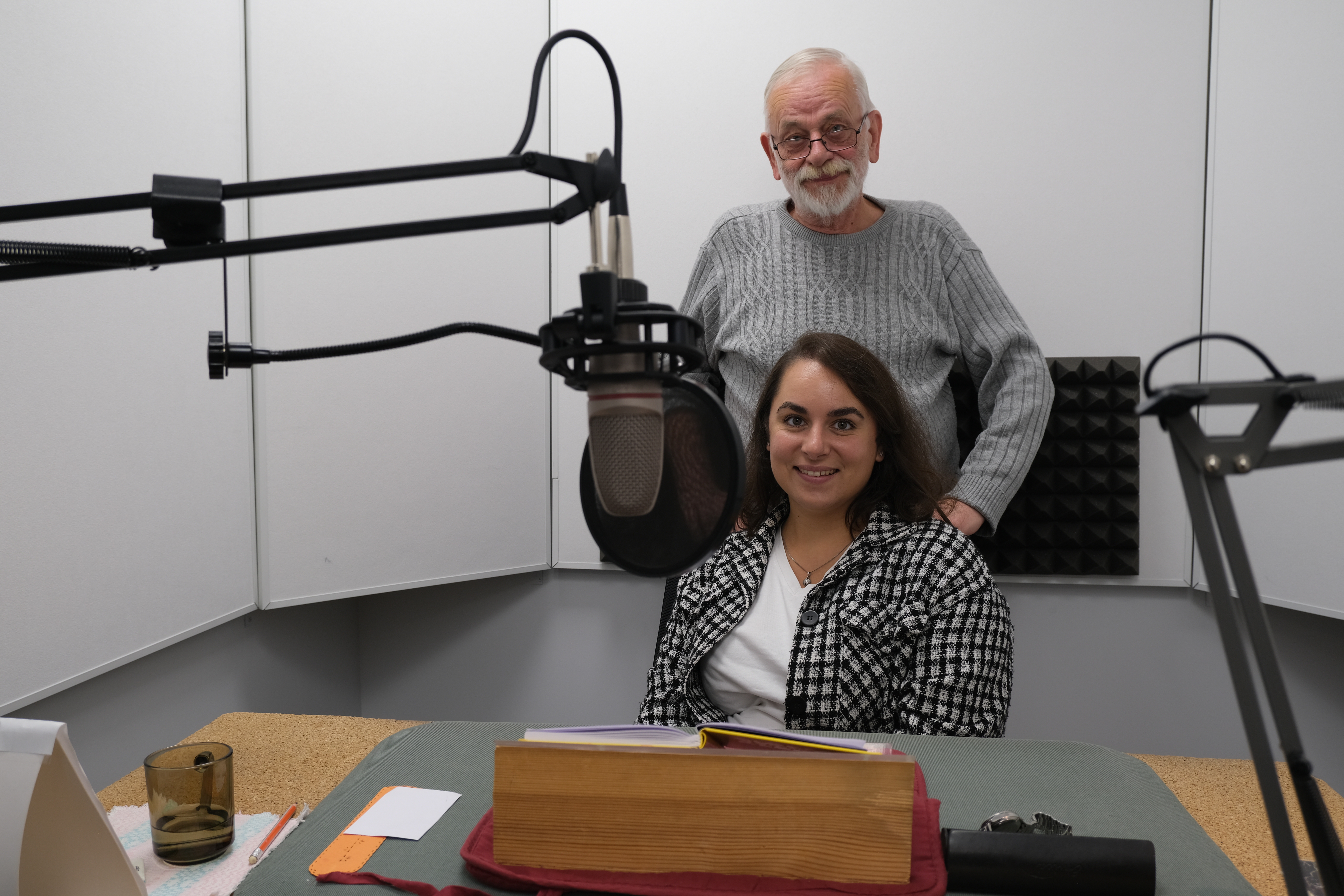
“Before starting to narrate a book, there’s quite a bit of preparatory work—from the simplest vocal warm-ups to figuring out how to stress a rare word or how to correctly pronounce an unfamiliar phrase in a foreign language. Every narrator has their own little pre-recording rituals, and each one is unique. I was curious to find out which books narrators love the most and which ones make them groan when they receive them, what’s the hardest part of this job, and what’s their biggest source of motivation? I tried to convey the day-to-day life in a recording studio through the stories of two LAB narrators from different generations—Algimantas Butvilas and Gustė Pupkevičienė. Do you know how many times Algimantas reads a book before recording it, and why Gustė brings three water bottles to the studio?” asks Monika Baranauskaitė as she introduces the audio stories being prepared for the September 3 celebration.
These audio stories will offer a different perspective on audiobooks—allowing listeners to hear not only the text being read, but also the people whose voices and work have accompanied LAB readers for decades.
The audio wall being created for the anniversary will offer a completely different perspective on the library’s history. It will serve as a sort of audio archive where, through the voices of narrators from different eras and excerpts from literary works, visitors can experience six decades of the library’s history.
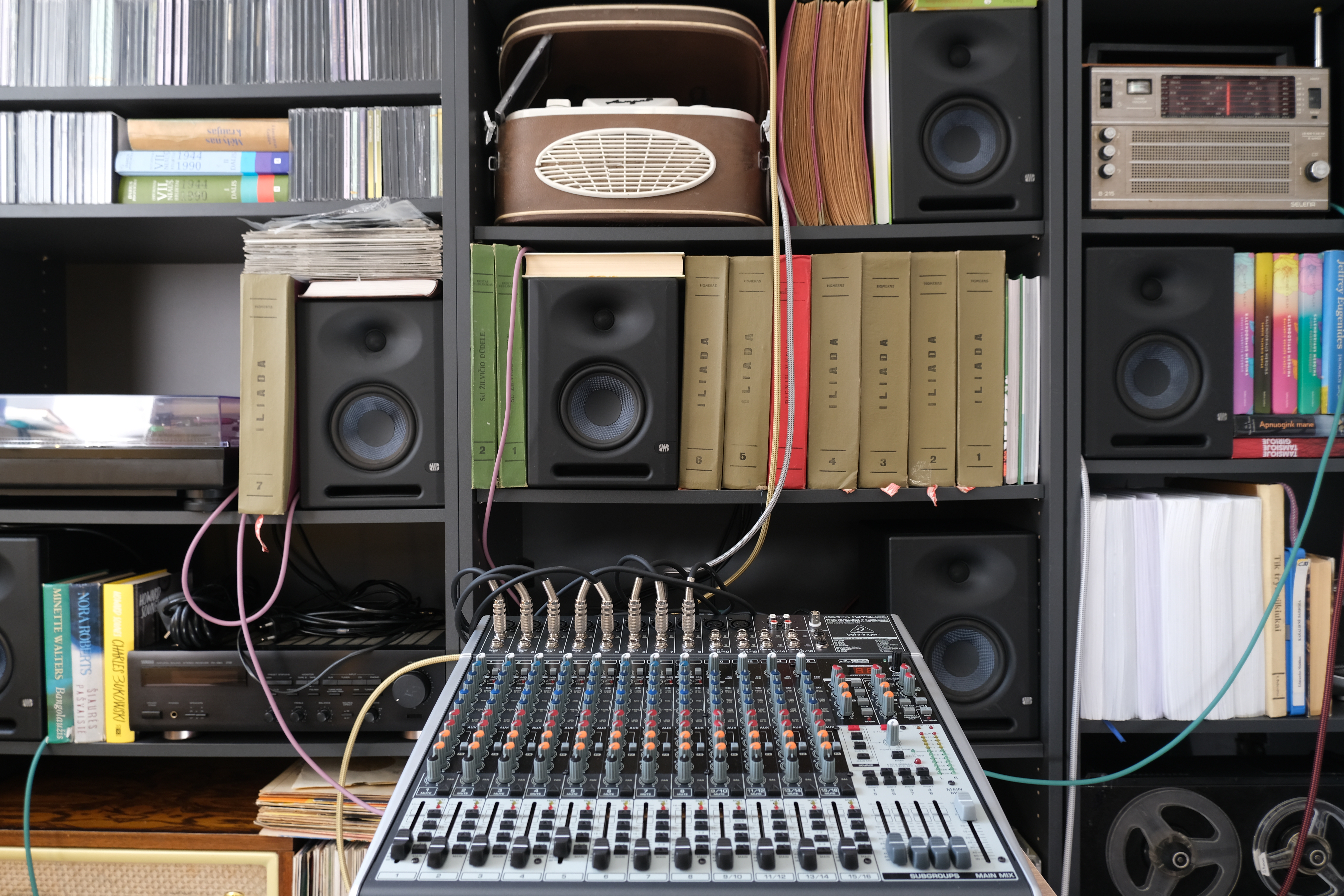
“Over the past 60 years, a multitude of different voices have been collected in the library’s archives. The ‘Wall of Sound’ will feature more than 40 narrators who have lent their voices to the library in the past and continue to do so today. You’ll also hear artificial, synthesized voices. Each excerpt is unique: some reflect the reader’s style, while in others the narrators reveal unexpected facets of their talent. The voices emanate simultaneously from nine speakers, creating a distinctive chorus of sounds. When you approach the sound console, you can identify the dominant voice, mute the remaining eight speakers, and listen closely to a single selected excerpt. Among them is Lithuania’s first audiobook: Eduardo Mieželaitis’s “Žmogus”, narrated by actor Eduardo Kunavičius,” explains Audrius Meška, chief curator of LAB’s publishing activities and the creator of the sound wall.
From Tapes and Cassettes to Books on Your Phone: How to Meet Changing Consumer Needs
The six decades of LAB’s activities also reflect changes in technology.
The first Lithuanian audiobook was released in 1962. For a long time, audiobooks were recorded and listened to on physical media, but today they are available digitally—through the ELVIS virtual library and mobile apps.
Today, LAB offers its readers books in a variety of accessible formats: these include printed books in Braille, tactile books for children, audiobooks (with more than 10,000 titles available in the ELVIS virtual library), as well as EPUB, DAISY, BRF, and other digital formats. It also invites you to watch movies and plays with audio description. And starting in 2024, LAB will certify accessible EPUB and PDF publications prepared by publishers, thereby helping to ensure that accessibility begins as early as the book’s publication stage and allowing people who read in alternative formats to not only read books at the library but also purchase them directly from the publisher.
“Looking back, we realize that there is simply no end point on our library’s journey—accessibility is a living process. However, it is clearer than ever: by making books, movies, and plays accessible to everyone, regardless of their disabilities or challenges, we are collectively fostering a resilient and enlightened society,” says LAB Director Inga Davidonienė.
People shape the history of the library
To mark its 60th anniversary, LAB is looking back not only at books and technology, but also at the people and places that have shaped the library’s history.
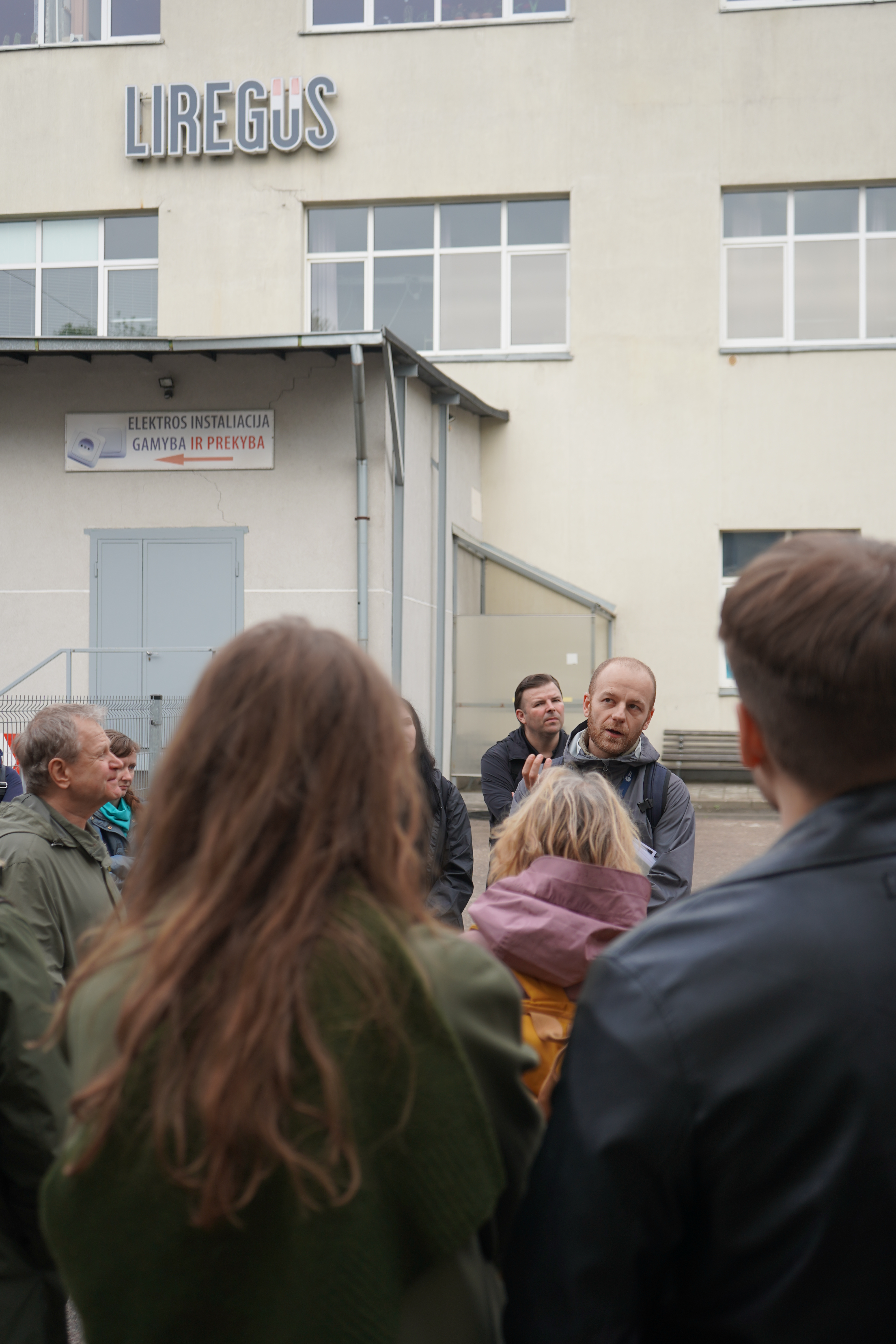
In collaboration with the public institution “Gatvės gyvos” and tour guide Albertas Kazlauskas, the library presented a series of historical tours this year titled “There’s Another Side to the City: Tours of Lithuania’s Neighborhoods for the Visually Impaired.” The tours took place in cities where LAB branches are located and invited both locals and visitors to take a fresh look at the places where communities of people with visual impairments began to form in the mid-20th century.
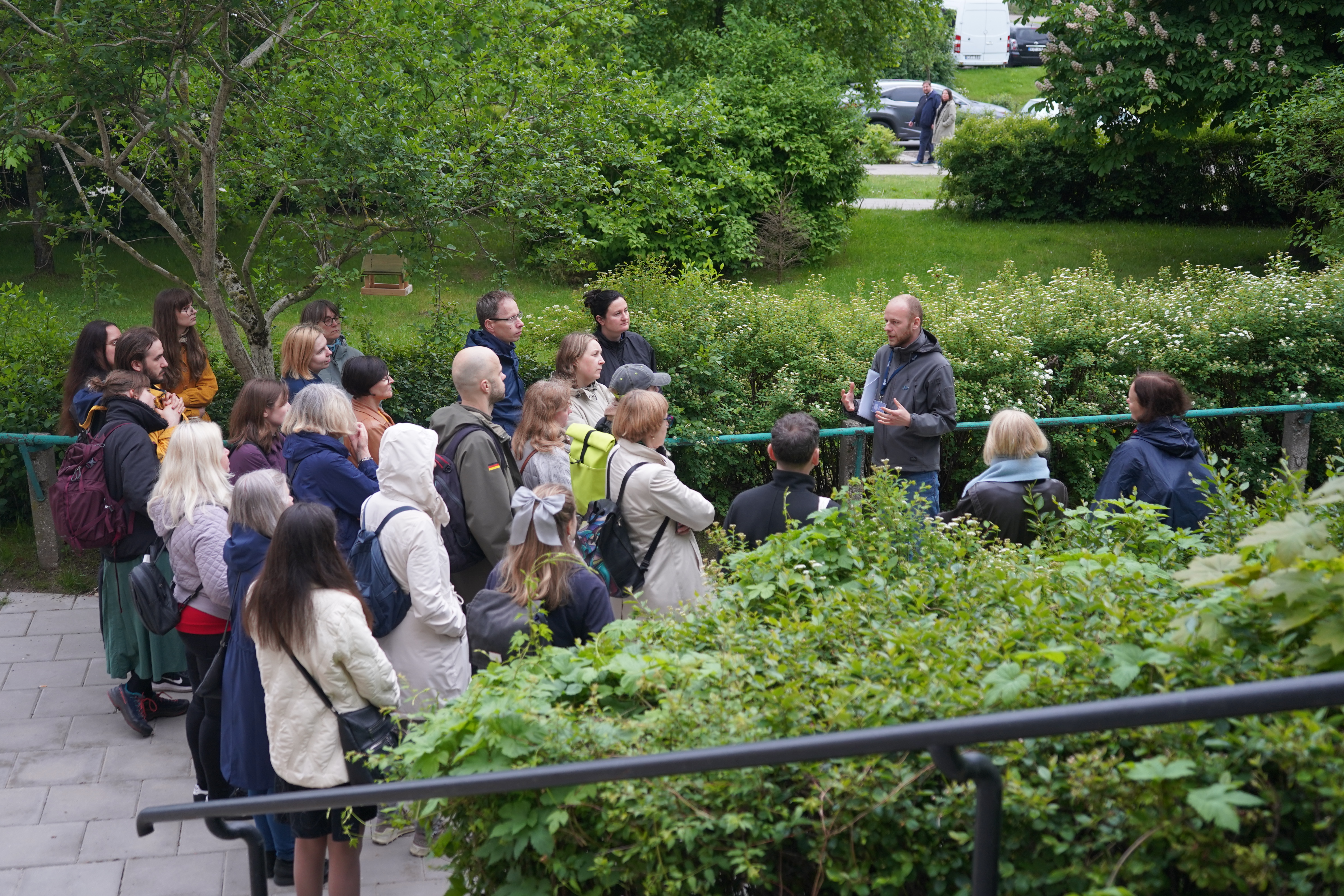
In these neighborhoods, apartment buildings, kindergartens, schools, stores, and libraries sprang up around the production complexes of the Lithuanian Society of the Blind. The origins of audiobooks in Lithuania are also linked to these places—audio readings were held at the complexes.
This story remains relevant today—it helps us understand how the lives of people with disabilities have changed. In the past, the community often concentrated in specific neighborhoods, also known as “ghettos,” near work, service, and cultural spaces adapted to their needs. Today, people have far more options when it comes to choosing where to live, study, work, and spend their free time, and accessibility is increasingly ensured by technology and universal design solutions.
“I can’t stop thinking about what Vytautas from Kaunas said—that in the past, the Lithuanian Association of the Blind was like ‘Rockefeller’ (meaning, a very wealthy organization)—and about Arvydas from Panevėžys’s memories of his early days at the company for the blind. He mentioned that when he learned of his irreversible vision loss, he hoped that his blind brothers and sisters in misfortune would be compassionate and welcome him into their circle as family, but it soon became clear that everyone here is a ‘normal person’ and, just like everywhere else, they make friends, have arguments, and lead the same emotionally rich lives as everyone who can see,” said guide Albertas Kazlauskas, sharing his impressions from meetings with community members while preparing for the tours.
Tours in the country’s five largest cities took place back in the spring, but the event in Vilnius on September 3 offers another opportunity to rediscover the history of Vilnius’s “skroblynė.”
“While the location of the district for the visually impaired in Klaipėda exuded a resort-like atmosphere, Šiauliai welcomed us with preserved fragments of the industrial complex’s interior and unique tactile solutions along the district’s inner streets. Kaunas impressed with the monumentality of its buildings and its particularly bustling location (the company was situated at a major intersection here), while Panevėžys, from an urban planning perspective, stood out for its elongated form. When comparing all these cities, Vilnius feels like an integral part of the metropolis, the capital, organically blending into what was once one of the capital’s most important industrial zones—Naujamiestis. I suspect that few Lithuanians even know what these districts are or what parts of the city they represent. I’m certain that the audience will be surprised and intrigued. It’s important not to be put off by the specific nature of the topic—trust me, it will be interesting to any curious person!” adds A. Kazlauskas.
The library invites you to celebrate its 60th anniversary together
LAB will celebrate its anniversary with a birthday party on September 3 at the library in Vilnius, located at 10 Skroblų St.
At 1:00 p.m., visitors are invited to join the guided tour “There’s Another Part of the City” led by Albertas Kazlauskas.
At 3:30 p.m., there will be a celebratory concert featuring Regina Jokubauskaitė, a longtime LAB announcer. The event will feature pre-recorded greetings and well-wishes from guests, as well as performances by the international men’s choir “Unia”.
At 5:00 p.m., various activities will take place at the library: a meet-and-greet with announcers Algimantas Butvilas and Guste Pupkevičienė, and a simultaneous chess exhibition with Viktorija Čmilytė-Nielsen. Sports commentator Romanas Buršteinas and actor Marius Repšys will provide commentary on the simultaneous exhibition, and the game can also be watched on the library’s YouTube channel.
At 6 p.m., the celebration will continue with a birthday party featuring DJ AurRam (Aurimas Ramonas).
Throughout the day, from 12 p.m. to 8 p.m., visitors will be able to listen to a sound installation created specifically for the library’s anniversary, visit the exhibition “From Need to Change,” Milda Palivonaitė’s exhibition of tactile jewelry, and learn about EPUB—today’s most accessible book format.
“We invite everyone—those who live nearby, those passing by, those who use the library’s services, and those who may never have heard of us before. After all, the library has always been created by people. We want to celebrate our 60th anniversary in the same way—together,” invites the Lithuanian Audiosensory Library.
Please note: the anniversary events and guided tours will be held in Lithuanian.