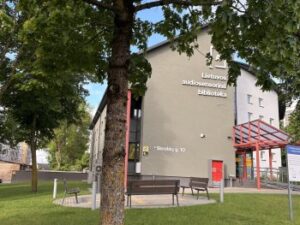
Every couple of months, the ELVIS virtual library is updated with a new batch of audiobooks in Spanish. These titles were added to the virtual shelves at the request of one reader.
Aldona is a Lithuanian from Venezuela who currently lives in Lithuania. Although she speaks Lithuanian fluently, she finds it most comfortable to read in Spanish—the language she grew up hearing. Starting in 2025, at her request, the virtual library ELVIS—administered by the Lithuanian Audiosensory Library—was expanded to include 47 audio fiction titles in Spanish from libraries in Spain and Argentina that serve readers with reading disabilities.
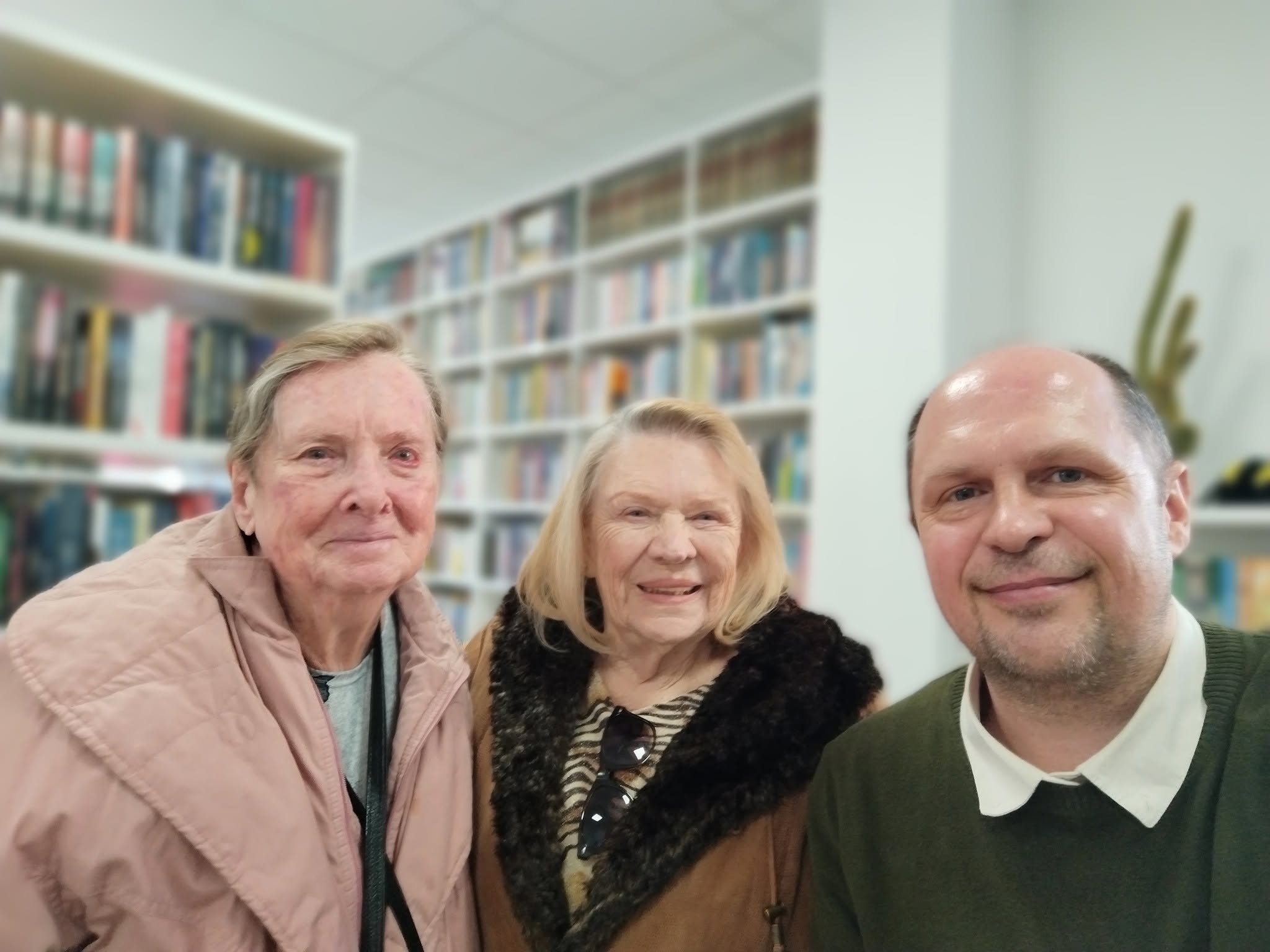
According to the library’s data, these books have been listened to nearly 1,000 times. This perfectly illustrates how one reader’s need can become a valuable resource for the entire community—the publications have become accessible to all ELVIS users.
This is just one example of how the Marrakesh Treaty operates in Lithuania, establishing common rules and enabling the exchange of accessible-format publications among the countries that have ratified the treaty.
It is much more than an international agreement—it is a practical tool that gives people who cannot read standard printed text the opportunity to discover literature in various languages.
Lithuania’s experience at a glance:
- 286 publications in accessible formats obtained through ABC;
- publications in 10 different languages;
- 11 partner countries;
- 1,204 users of these publications in the ELVIS virtual library
Lithuania ratified the Marrakesh Treaty in 2018 and incorporated its provisions into national law. The Lithuanian Audiosensory Library (LAB), which became a full member of the Accessible Books Consortium (ABC)—the primary international platform for the exchange of accessible publications—established by the World Intellectual Property Organization.
Since 2022, using the international network for the exchange of accessible publications, LAB has added 286 publications to its collection from Argentina, Australia, Estonia, France, Israel, New Zealand, Poland, Spain, the United Kingdom, the United States, and Germany. Today, these publications are available to 1,204 readers of ELVIS, the virtual library administered by LAB. It was precisely for this kind of international cooperation that the Marrakesh Treaty was created.
Today, readers can find books in more than 10 different foreign languages in the ELVIS library. A wide range of publications is available here—from fiction for children and adults to biographies, educational literature, and books on citizenship, democracy, and other topics.
However, the true impact of the Marrakesh Treaty is best illustrated by people’s stories.
Ugnė Žilytė, a doctoral student at Vilnius University, explains that access to books in foreign languages has fundamentally changed her academic opportunities.
“The Marrakesh Treaty opened the door for me to a much wider selection of literature in foreign languages—I wrote my final papers at the university, was able to learn foreign languages, and expand my knowledge on other topics. I still take advantage of the opportunities offered by the Marrakesh Treaty to this day,” says Ugnė Žilytė.
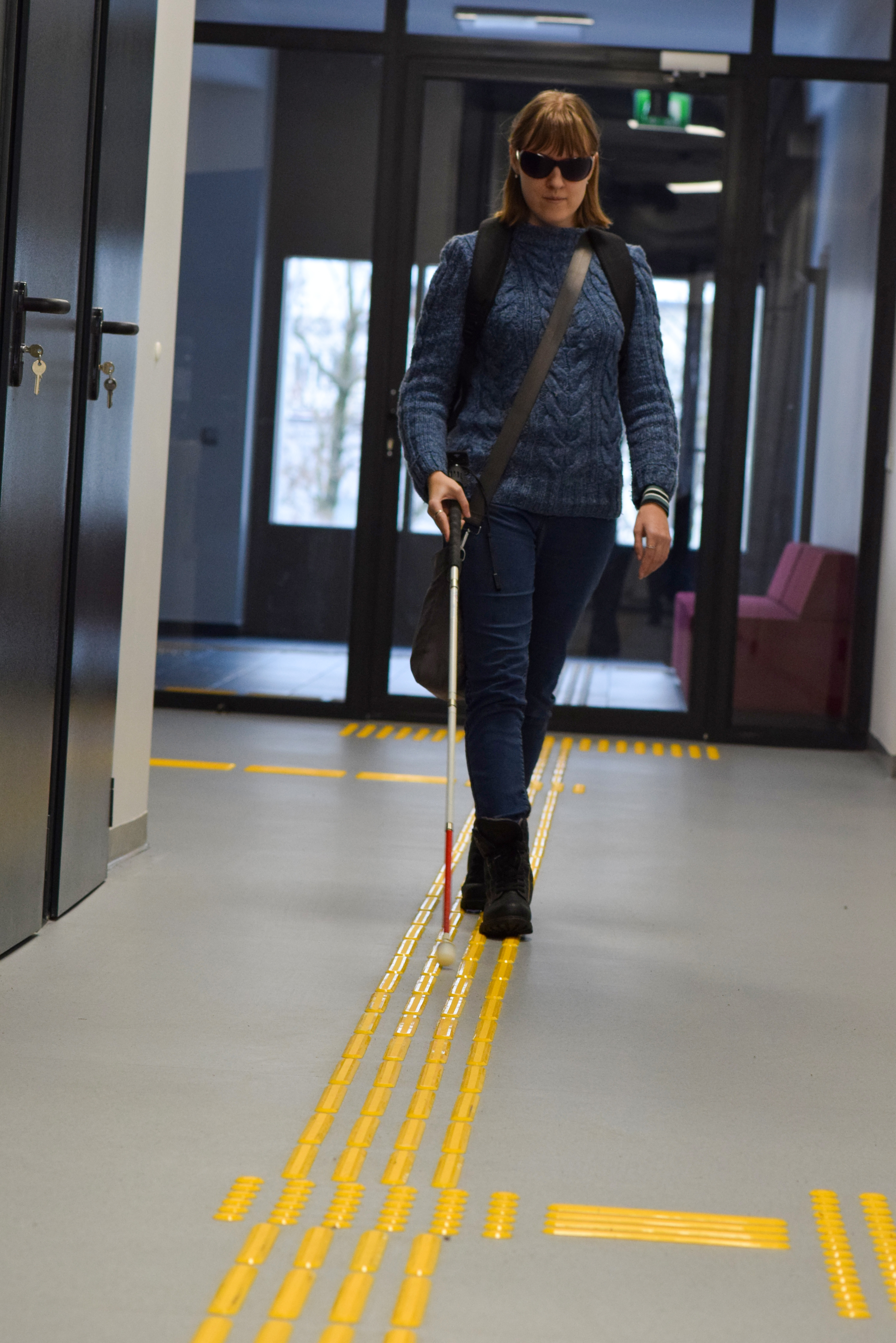
The benefits of the Marrakesh Treaty extend beyond audiobooks. Through ABC, Lithuania also received five publications in English in the Braille Ready Format. One reader borrowed a Braille display from the library and, using these publications, learned to read English in Braille.
Ugnė Žilytė, a doctoral student at Vilnius University, says that access to books in foreign languages has fundamentally changed her academic opportunities.
“The Marrakesh Treaty has opened the door to a much wider selection of literature in foreign languages—I wrote my final papers at the university, was able to learn foreign languages, and expand my knowledge on other topics. I still take advantage of the opportunities offered by the Marrakesh Treaty to this day,” says Ugnė Žilytė.
The benefits of the Marrakesh Treaty extend beyond audiobooks—through the ABC platform, Lithuania has also received five publications in English in electronic Braille (BRF format). One library patron took advantage of the opportunity to borrow a Braille display and, using these publications, learned to read English in Braille.
However, Lithuania is not merely a recipient of accessible publications. LAB also actively contributes to the international sharing of content—it offers 7,625 publications in Lithuanian to countries that have ratified the treaty. Although interest has not been high so far, libraries in the United States and India, as well as the World Intellectual Property Organization’s Accessible Books Consortium (WIPO ABC), have made use of these resources to expand their collections. It is expected that interest in Lithuanian-language content will grow in the future.
LAB also offers publications in Ukrainian to countries that have ratified the treaty. Following Russia’s invasion of Ukraine, LAB, together with its Ukrainian partners, ensured that Ukrainians with visual impairments living in Lithuania could read books in their native language.
Thanks to the Lviv Branch of the National Assembly of People with Disabilities of Ukraine, the ELVIS library now offers over 200 audiobooks for children and teenagers in Ukrainian, while physical libraries also carry Ukrainian publications in Braille. In this way, Lithuania has become a bridge between readers from Ukraine and the countries worldwide where Ukrainians have temporarily settled while fleeing the war.
Lithuania’s experience demonstrates that the Marrakesh Treaty provides not only a legal basis for exchanging accessible publications, but also tangible benefits to individuals. A single reader’s needs, the opportunity to study a foreign language, learn Braille, or read in one’s native tongue—these are concrete examples of how an international agreement translates into everyday accessibility.